


The history
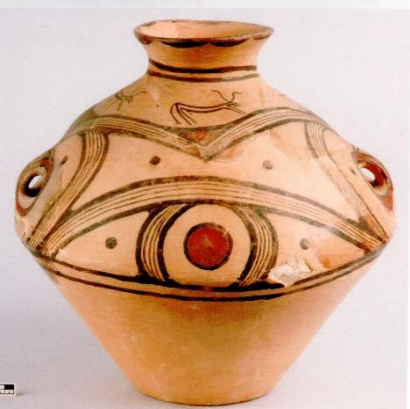
The territory of the Republic of Moldova has a long history, being populated since the Lower Paleolithic era (about 500 thousand years ago). The Eneolithic era brought the Cucuteni-Tripoli culture, known for its outstanding artistic achievements.
The Geto-Dacian civilization prospered in Moldova between the 6th and 1st centuries BC. Romanization took place in the 2nd century BC, with the victories of Emperor Trajan over Dacia, influencing the language and culture of this region.
After the withdrawal of the Roman legions in 271, Moldova was marked by popular migrations, and in 1359 the Moldavian feudal state was established, with Bogdan I as the founder.
In 1812, the Treaty of Bucharest led to the annexation of the eastern part of Moldova, called Bessarabia, by the Russian Empire, which ruled the territory until 1918.
In 1918, the Council of the Land of Bessarabia decided on the union with Romania, which lasted until 1940, when, following the Ribbentrop-Molotov Pact of 1939, Bessarabia was annexed by the Soviet Union. As a territorial unit within the USSR, it functioned until the last decade of the 20th century.
On August 27, 1991, the Republic of Moldova became an independent and sovereign state.
After the declaration of independence, the Republic of Moldova went through a series of political and economic changes. Also, in the years that followed, the Republic of Moldova showed an interest in getting closer to the European Union. Thus, in January 2010, negotiations regarding the Association Agreement were launched. After the conclusion of the negotiations, it was signed on June 27, 2014, in Brussels, Belgium.
On March 4, 2022, the Republic of Moldova officially submitted its application for accession to the European Union.
On June 17, 2022, the European Commission issued its opinion on the application for accession, by which it recommended to the EU Council that the Republic of Moldova be granted candidate status in the situation where measures will be taken in several areas.
On June 23, 2022, the European Council recognized the European perspective of the Republic of Moldova and decided to grant it the status of a candidate country for accession to the European Union.